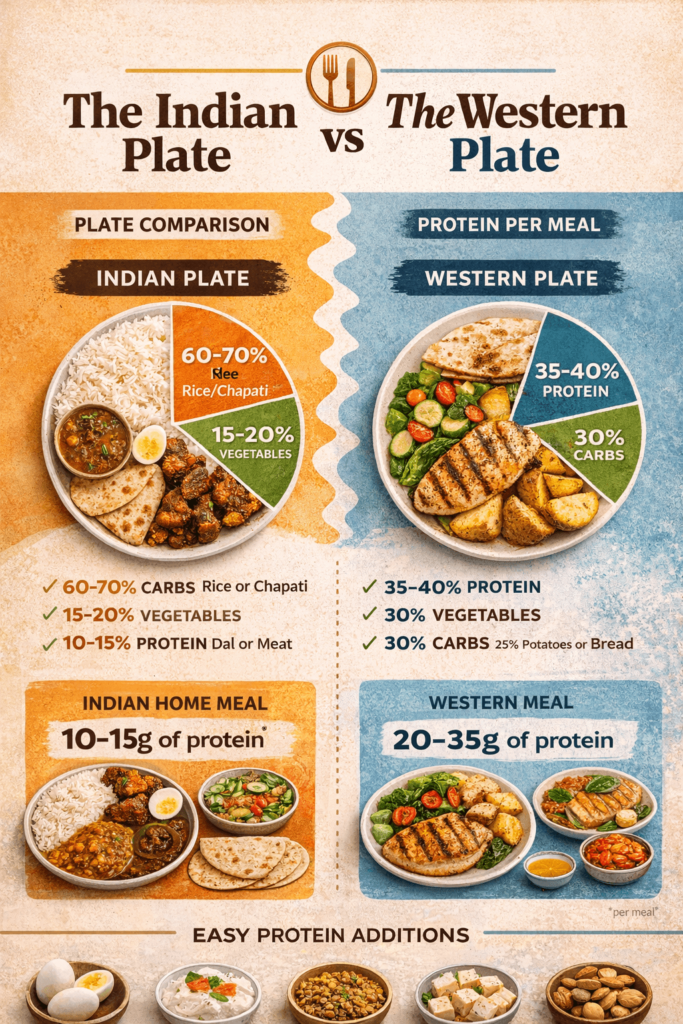
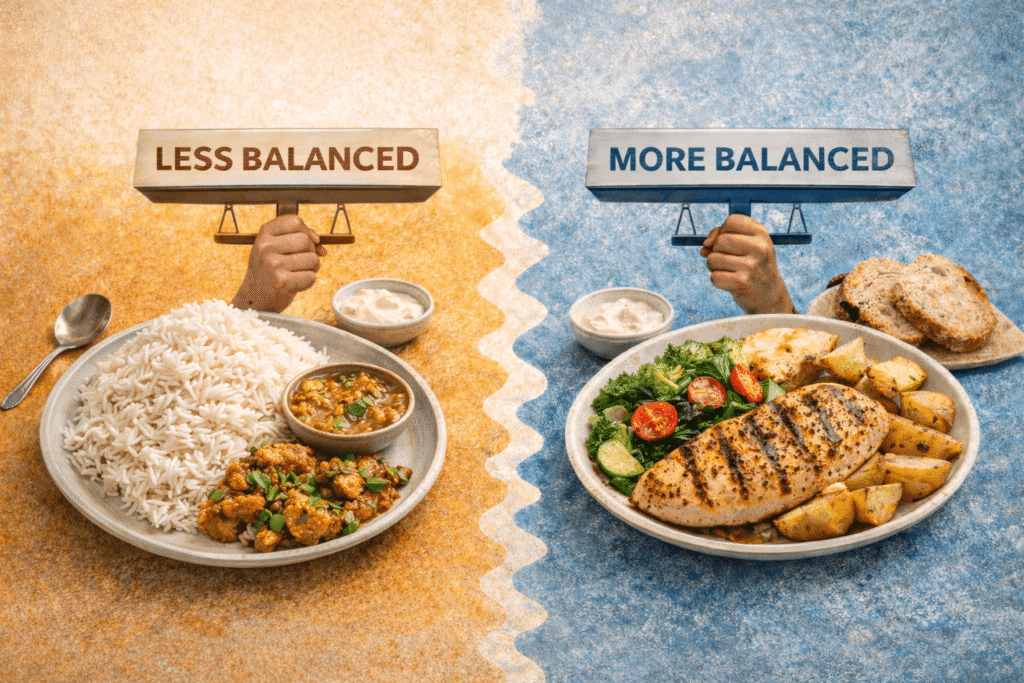
If you place a typical Indian meal next to a typical Western meal, the difference becomes obvious almost immediately.
On one plate, you might see a large portion of rice or chapatis with a small bowl of dal and vegetables. On the other, a grilled chicken breast or salmon fillet takes center stage, surrounded by vegetables and a smaller portion of carbs.
Both meals can be healthy. Both are rooted in long culinary traditions.
But nutritionally, there’s one major difference: protein often plays a much smaller role in the average Indian meal.
This isn’t necessarily intentional. It’s the result of history, affordability, cultural habits, and how our plates have been structured for generations.
The problem is that when protein consistently takes a back seat, it can quietly affect energy levels, muscle health, and overall nutrition.
Why Many Traditional Indian Meals Are Low in Protein
A typical Indian meal usually looks like this:
- Rice or chapati (largest portion)
- Dal or lentils
- One vegetable dish
- Yogurt or pickle
- Occasionally, eggs, fish, chicken, or paneer
Grains form the foundation of the meal, which makes sense historically. They’re affordable, filling, and widely available.
But nutritionally, this structure means most calories come from carbohydrates, while protein plays a secondary role.
For example:
| Food | Protein |
| 1 cup cooked rice | ~4g |
| 1 chapati | ~3g |
| 1 small bowl of dal | ~6–8g |
Even a full meal may only contain 10–15 grams of protein, which is often less than what many adults need per meal.
How Western Meals Are Structured Differently
Western meals tend to be organized around a primary protein source.
A typical dinner might include:
- Grilled chicken, steak, or fish (20–30g protein)
- Vegetables
- Potatoes, rice, or bread
In this format, protein is the center of the plate, while carbs act as a supporting element.
Breakfast follows the same pattern:
- Eggs
- Greek yogurt
- Protein-rich cereals or oats
- Cheese or nut butters
This structure makes it easier to meet daily protein requirements without thinking about it too much.
Why Indian Diets Evolved This Way
There are several reasons Indian meals developed differently.
1. Agricultural history
Staples like rice, wheat, and millets have historically been cheaper and easier to produce than meat or dairy. Feeding large families meant relying on foods that could stretch across many plates.
2. Vegetarian traditions
Large parts of India follow vegetarian diets for cultural or religious reasons. Plant-based diets can absolutely provide enough protein, but it requires larger portions of lentils, legumes, dairy, or soy than many everyday meals include.
3. Protein foods are treated as “special.”
In many homes, foods like eggs, fish, chicken, and paneer are not everyday staples. They’re often treated as special dishes rather than daily nutrition.
Why Protein Matters More Than We Think
Protein is one of the most important nutrients the body needs.
It helps with:
- Building and maintaining muscle
- Supporting metabolism
- Hormone production
- Hair and skin health
- Feeling full after meals
When protein intake is too low, people may experience:
- Persistent fatigue
- Hair thinning
- Muscle weakness
- Difficulty maintaining a healthy weight
Nutrition surveys, such as the ones found here by the Council on Energy, Environment and Water, have shown that a significant portion of Indians consume less protein than recommended, especially women.
Small Ways to Add More Protein to Indian Meals
The good news is that improving protein intake doesn’t require abandoning traditional food.
Small adjustments can make a big difference:
Breakfast
- Add eggs
- Greek yogurt or thick curd
- Peanut butter with toast
Lunch and dinner
- Increase dal portions
- Add paneer or tofu
- Include eggs, fish, or chicken more regularly
Snacks
- Roasted chana
- Sprouts
- Nuts
- Boiled eggs
Even adding 10–15 grams more protein per meal can significantly improve daily intake.
Rethinking the Indian Plate
Indian cuisine is one of the richest and most diverse food traditions in the world.
The issue isn’t the ingredients—it’s often the proportions.
By slightly shifting the balance of our plates and giving protein a larger role, we can keep our culinary traditions intact while improving long-term health.
Sometimes, better nutrition doesn’t require new foods at all.
Just a different balance on the plate.