
I learned how food reflects culture, economics, and belief systems. I learned how certain ingredients carry prestige, while others are everyday staples. And I learned how the way we distribute food can quietly shape who gets nourishment and who makes do with less.
Some people remember childhood through flavors.
The hiss of a pressure cooker releasing steam. The smell of onions slowly browning in mustard oil. The rhythm of rotis swelling gently over a flame. Kitchens were alive with sounds and aromas that stitched everyday life together.
I remember those things too.
But I also remember watching how food moved around the table.
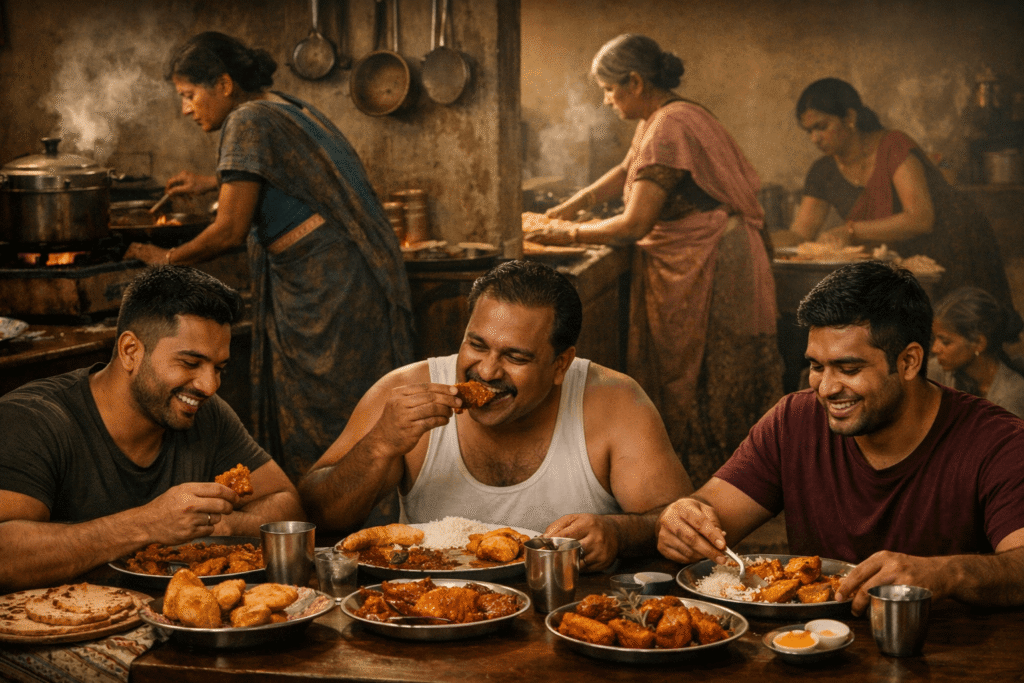
In our home, meals were rarely just meals. They were quiet rituals. Rice would sit steaming in a large pot, dal simmering beside it, vegetables cooked simply with cumin and turmeric. And then there was always the special dish, the one everyone looked forward to. Maybe fish fry, maybe chicken curry, sometimes mutton if it was a Sunday or a celebration.
That dish carried the most anticipation.
As a child, you start noticing how those dishes are served. The chicken legs, the fish belly pieces, and the thickest portions of gravy. Certain parts of the meal were clearly more prized than others. They were richer, more flavorful, and without us ever discussing it openly, everyone seemed to know who would get them.
The distribution felt natural at the time. It was simply how things were done.
But when you look back, you realize something interesting about those plates.
The foods that carried the most protein and nutrition—eggs, fish, chicken, mutton—were also the foods treated like rare delicacies. They were expensive, cooked less often, and divided carefully.
And often, they didn’t end up equally on everyone’s plate.
Children sometimes got a piece if they asked loudly enough. The men in the family were served generously. But many of the women who cooked the meal ate later, often after everyone else had finished. By then, the prized pieces were usually gone.
What remained was still good food—rice, dal, vegetables, and gravy—but lighter, simpler.
No one framed it as a sacrifice. It was just the rhythm of the household.
Sometimes you also hear strange explanations floating around the kitchen. That certain foods were “too rich.” That eating too many eggs or too much meat wasn’t good for women. That it could “disturb hormones,” whatever that meant to a child who barely understood the word.
Those ideas hung in the air like family folklore.
Years later, when you start reading about nutrition, you realize how quietly those patterns shape health. Across many households, women grow up eating smaller portions of protein-rich foods, not because someone explicitly denies them, but because food traditions quietly prioritize others first.
And over time, that adds up.
Iron deficiency. Protein deficiency. Fatigue that people simply call “normal.”
Looking back now, the kitchen feels like a classroom where I learned more than just recipes.
I learned how food reflects culture, economics, and belief systems. I learned how certain ingredients carry prestige, while others are everyday staples. And I learned how the way we distribute food can quietly shape who gets nourishment and who makes do with less.
But I also remember the joy of food; the smells, the laughter around the table, the aunties arguing about whether the fish needed more salt.
Food was never just about nutrients.
It was memory, comfort, hierarchy, celebration, and sometimes quiet compromise, all served on the same plate.
And maybe that’s why I remain so fascinated by it today.
Because every dish tells a story, not just about taste, but about the lives, traditions, and choices that brought it to the table.