
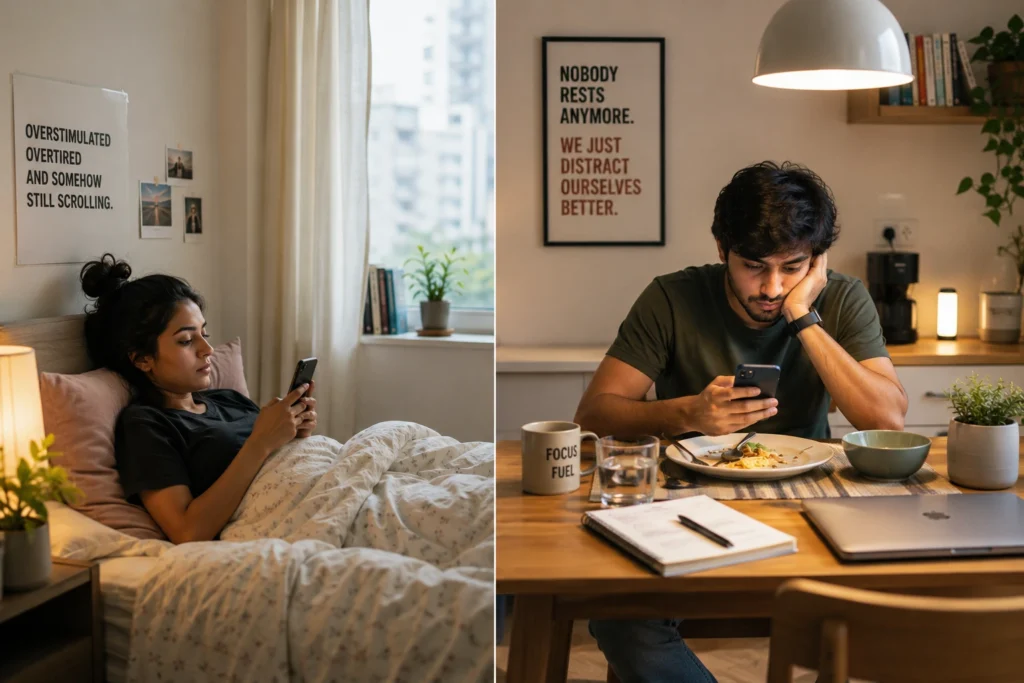
Modern Burnout No Longer Looks Like Collapse
Burnout used to look obvious. People would break down, quit jobs, disappear for a while, or openly admit they were exhausted. There were visible signs that something was wrong. Today, it rarely looks like that anymore.
Now burnout wears headphones.
It scrolls Instagram reels during lunch breaks.
It binge-watches shows until 2 AM while saying, “I just need to relax.”
It orders food because cooking feels like another task.
It listens to podcasts while showering because silence feels uncomfortable.
We no longer know how to rest without stimulation. Modern burnout and digital distraction no longer look dramatic, but strangely aesthetic. Cafes are full, Netflix subscriptions are active, playlists are running, people are travelling, posting stories, sharing memes, and constantly consuming content. From the outside, everyone looks entertained. But entertained people are not necessarily rested people.
Entertainment Became a Digital Distraction Loop
There was a time when rest actually meant stopping, doing nothing, sitting outside, going for walks without earphones, sleeping on time, and talking to people without checking notifications every few minutes.
Now, rest has become another form of consumption. After mentally draining ourselves with work, we immediately replace one kind of stimulation with another. Work drains attention, and entertainment captures whatever attention is left. The brain never truly slows down.
Even moments that are supposed to feel peaceful now come layered with noise:
- music while eating
- videos while commuting
- doomscrolling before sleep
- checking emails during weekends
- replying to work messages during dinner
People say they are “taking a break,” but most breaks are simply distractions with better branding.
The Phone Became The New Waiting Room
One of the clearest signs of this shift is how uncomfortable people have become with stillness. The moment there is a pause, the phone appears.
Waiting for an elevator? Scroll.
Standing in a queue? Scroll.
Lying in bed? Scroll.
Eating alone? Scroll.
There have been extensive studies highlighting the dangers of doomscolling. To state the least, there is almost no empty space left in modern life; every gap gets filled instantly because silence now feels unfamiliar. The mind is constantly occupied, but rarely restored. This is probably why so many people feel tired even after weekends, vacations, or entire days spent “relaxing.” The body may stop working, but the brain never stops consuming.
Digital Distraction Replaced Genuine Rest
What makes this worse is how normalized exhaustion has become.
People casually joke about being sleep-deprived; being “booked and busy” is treated like an achievement. Answering messages late at night is seen as dedication, and constant productivity is rewarded more than actual well-being. Some people do not even recognize burnout anymore because they have lived inside it for so long. And instead of addressing exhaustion directly, society sells temporary escapes:
- another streaming platform
- another weekend outing
- another dopamine hit
- another app designed to hold attention longer
The system does not encourage recovery. It encourages continuous engagement.
The Relationship Between Overstimulation and Burnout
Actual rest is quieter than distraction. It may even feel uncomfortable initially because most people are no longer used to being alone with their thoughts. Real rest does not constantly entertain the brain. It allows the nervous system to slow down.
Sometimes rest is:
- sleeping without guilt
- sitting in silence
- walking without content playing
- spending time offline
- having conversations without multitasking
- allowing the brain to experience boredom again
But boredom itself has become something people try to eliminate immediately. And maybe that is the problem.
We Are Overstimulated, Not Recovered
The modern lifestyle creates a strange illusion where people feel occupied all the time but emotionally disconnected from themselves. Everyone is consuming something constantly, yet very few people feel mentally refreshed.
We confuse stimulation with recovery because both temporarily help us escape discomfort. But only one of them actually heals exhaustion. The scary part is that many people may go years without experiencing genuine rest anymore.
Not because they are lazy.
Not because they lack discipline.
But because the world has trained them to replace rest with endless distraction.
And after a while, exhaustion starts feeling normal.