
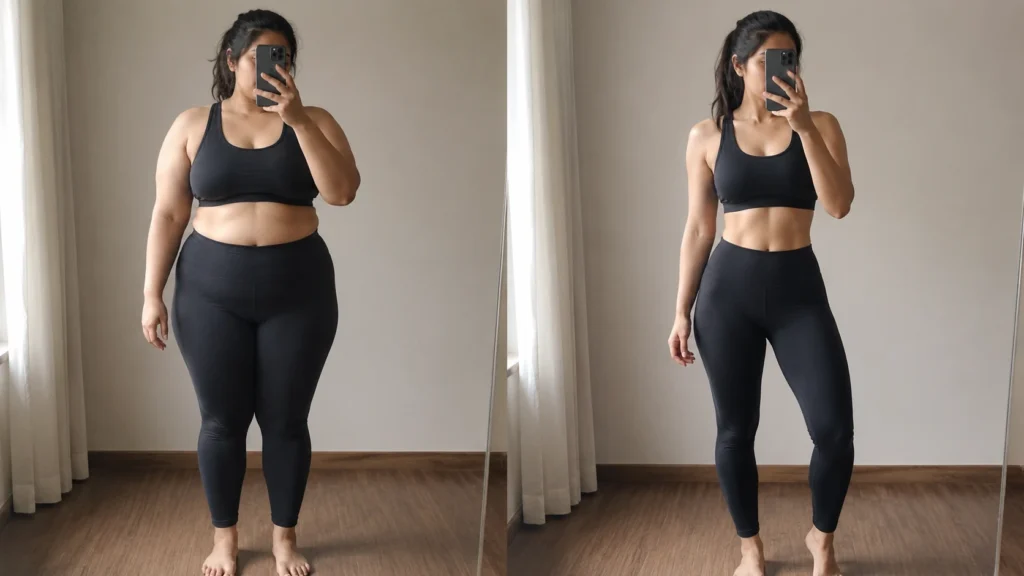
The only mantra I followed was simple: More Protein, Less Carbs.
That doesn’t mean zero carbs. I still eat rice, roti, and even occasional sweets. The difference is that I stopped making carbs the main character of every meal. What helped me the most was calculating my protein requirement and ensuring protein made up the majority of each meal, while also keeping the meal balanced.
If you have ever wondered what is a balanced diet, it is not about eating salads all day or completely avoiding carbs. It is about creating meals that keep you full, nourished, and sustainable for your lifestyle.
Breakfast options usually looked like:
- Protein shake
- Chickpea salad
- Moong dal cheela
Lunch was something filling but balanced:
- Dalia khichdi loaded with vegetables
- Rice and dal with lots of paneer
- Eggs or tempeh added for extra protein
Dinner stayed relatively light:
- Millet roti (pearl/sorghum/Maize)
- Salad
- A vegetable curry
Nothing extreme. Nothing fancy. Just meals that kept me full for longer and prevented random cravings throughout the day.
I Still Eat “Unhealthy” Food Sometimes
One thing I never believed in was completely restricting myself. Weekends are usually when I indulge a little. But even then, I try to balance things out instead of going overboard. For example, if I am having noodles, I won’t eat a massive portion mindlessly. I add eggs and vegetables to make the meal more balanced and protein-rich.
A lot of people ask, what is a balanced diet when trying to lose weight. The answer is actually much simpler than the internet makes it seem. A balanced diet is one where your meals contain enough protein, healthy fats, fiber, and carbs in reasonable portions instead of heavily depending on just one food group.
That being said, sometimes I even have Coke alongside it, but I switch to Diet Coke. That balance helped me stay consistent because the routine never felt like punishment.
The Biggest Advantage? I Naturally Eat Less
I’m also someone who doesn’t enjoy eating three meals a day, especially on weekends. Since my office starts early on weekdays, weekends become my chance to catch up on sleep. I usually wake up around 9 or 10 AM, take my time getting ready, and before I know it, it’s already noon.
That naturally turns my first meal into a late, protein-rich brunch. Because the meal is filling, I comfortably stay full till around 5 PM, which becomes the perfect time for dinner. So even when I indulge a little, my overall calorie intake doesn’t become excessively high. That unintentionally worked in my favor during weight loss.
Workouts Played a Huge Role Too
Diet alone wasn’t the only reason I lost weight. I was also extremely consistent with workouts. I genuinely enjoy strength training, which made the process sustainable. I have two sets of dumbbells — light (2 KGs) and heavy(5 KGs) — that I still use regularly at home.
For cardio, I play badminton on weekends because it feels enjoyable instead of forced. Traditional cardio routines bored me quickly, but badminton never did. I would also credit a lot of my consistency to Chloe Ting. Her workouts are simple, effective, and beginner-friendly enough to make you want to keep showing up.
I worked out consistently for over a year, and now it genuinely feels like a habit I cannot part ways with. In fact, my body starts feeling sore and sluggish if I stop working out for several days.
What Actually Helped Me Lose 10 Kgs
Looking back, I think these were the biggest reasons why this worked for me:
- I never followed extreme diets
- I focused on protein instead of starving myself
- I still ate foods I enjoyed
- I found workouts I genuinely liked
- I stayed consistent instead of trying to be perfect
Most people fail because they choose routines they cannot maintain for more than a month. Sustainable weight loss is honestly boring. It is repeating small, manageable habits long enough for them to become your normal lifestyle.
And once that happens, maintaining the weight becomes much easier than losing it in the first place.