
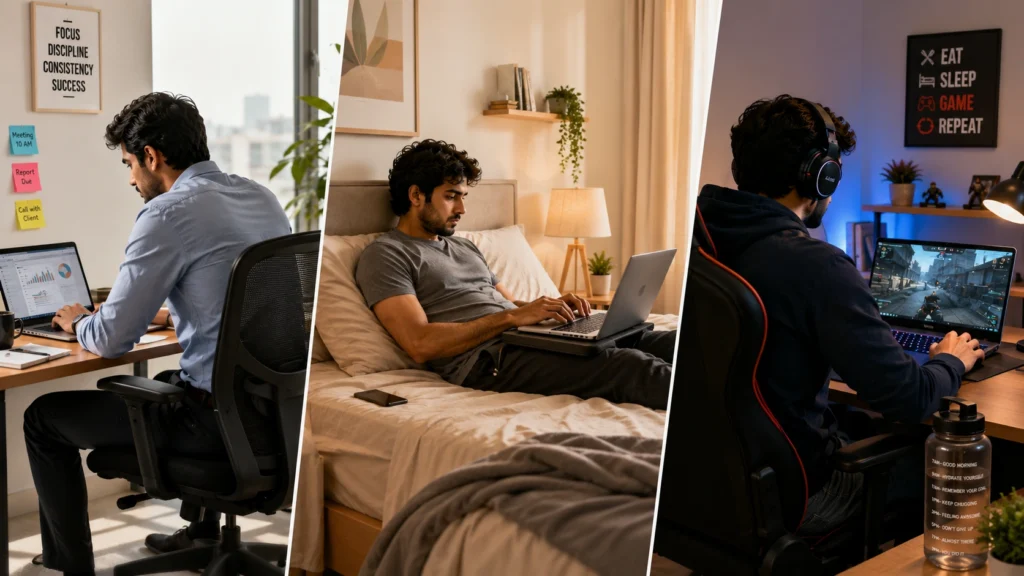
You wake up, sit for work, sit during lunch, sit during meetings, sit while scrolling your phone, and then maybe sit again for gaming or Netflix before finally lying down in bed. Somewhere in between all of this, your body quietly starts collecting damage.
Someone I know got diagnosed with an L4-L5 disc bulge. And no, it wasn’t because of an accident or heavy weightlifting. It was because of sitting. Long sitting hours at work, sitting on the bed during meetings, then shifting to a chair for gaming afterward. Day after day, month after month.
At first, it started as normal back pain. The kind most people ignore. A little stiffness after waking up. Pain while bending. Discomfort after sitting for too long. But eventually, the pain became constant. Ironically, the only relief came from sitting or lying down, which only made the cycle worse.
These are actually some of the common disc bulge symptoms people ignore in the beginning because they seem harmless. Many assume it is just temporary fatigue from work, bad posture, or lack of sleep.
The surprising part? The person ate healthy, stayed mindful about food, and overall seemed to be doing things “right.” That’s what made the diagnosis shocking. Sometimes, you assume health problems only come from junk food or lack of exercise. But the body doesn’t work that simply.
Then came the MRI report.
L4-L5 disc bulge.
Suddenly, stretching became a daily necessity instead of a wellness trend people casually talk about online. Physiotherapy sessions became routine. Standing while working became important. Constant movement throughout the day was no longer optional.
For many people, l4 l5 disc bulge treatment often involves a combination of physiotherapy, posture correction, stretching exercises, movement-based recovery, and avoiding prolonged sitting. In severe cases, doctors may recommend additional medical interventions depending on the condition. And honestly, this is becoming far more common than people realise.
Your Body Was Never Designed To Sit This Much
Human bodies are built for movement. Walking, stretching, squatting, bending, lifting, and turning. But modern life has quietly removed most of these natural movements.
Today, many people spend:
- 8 to 10 hours sitting for work
- Additional hours sitting during commuting
- More hours sitting while gaming or watching content
- Even “rest time” lying down while using phones or laptops
The body adapts to whatever lifestyle you repeatedly give it. If movement disappears from your routine, stiffness slowly replaces mobility.
The Dangerous Part Is How Silent It Feels
Most sitting-related health problems don’t appear dramatically overnight. They build quietly. A tight neck here. Lower back pain there. Shoulder stiffness. Weak hips. Reduced flexibility. Numbness in the legs. Poor posture. Fatigue despite doing “nothing physically exhausting.”
People often dismiss these as temporary discomforts because they still feel young or functional. Until one day, the body forces attention.
It’s Not Just About Back Pain
Long sitting hours affect more than just the spine.
Research has repeatedly linked sedentary lifestyles to problems like:
- Poor blood circulation
- Increased risk of obesity
- Reduced muscle strength
- Joint stiffness
- Poor posture and spinal stress
- Increased fatigue and lower energy levels
- Higher risk of lifestyle diseases over time
And the scary part is that many of these issues develop even in people who appear healthy otherwise. You can eat salads, drink smoothies, avoid junk food, and still suffer physically if your body barely moves.
Stretching Is Not Optional Anymore
Many people treat stretching like something athletes do. But modern desk lifestyles make stretching necessary even for regular office workers; it is worth looking into the WHO guidelines on physical activity and sedentary behaviour.
Keep in mind that your muscles tighten when they stay in the same position for too long. Your hips become stiff. Your hamstrings pull on your lower back. Your shoulders round forward. Your neck slowly shifts into that “screen posture” position.
A few minutes of movement throughout the day can genuinely make a difference.
Simple habits help:
- Standing up every 30 to 45 minutes
- Stretching your back and hips daily
- Walking while taking calls
- Avoid working from bed for long hours
- Using standing desks occasionally
- Taking short movement breaks between tasks
None of these sounds life-changing in the moment. But their absence becomes life-changing later. In case you are trying to improve your lifestyle overall, you may also like reading How I Lost 10 Kgs. .
Your Future Body Is Watching What You’re Doing Today
The hardest part about health problems caused by sitting is that they often begin when you still feel perfectly fine. When you’re young, energetic, and capable of working endlessly, your body absorbs the damage quietly. But eventually, it starts responding.
Sometimes through pain, sometimes through stiffness, and other times through medical reports, you never expected. So if you are healthy today, don’t wait for your body to force movement into your life.
Stretch while you still have the freedom to ignore it, walk before your body demands physiotherapy, and move before pain becomes your reminder. Because the body always keeps score, even when you think nothing is happening.