
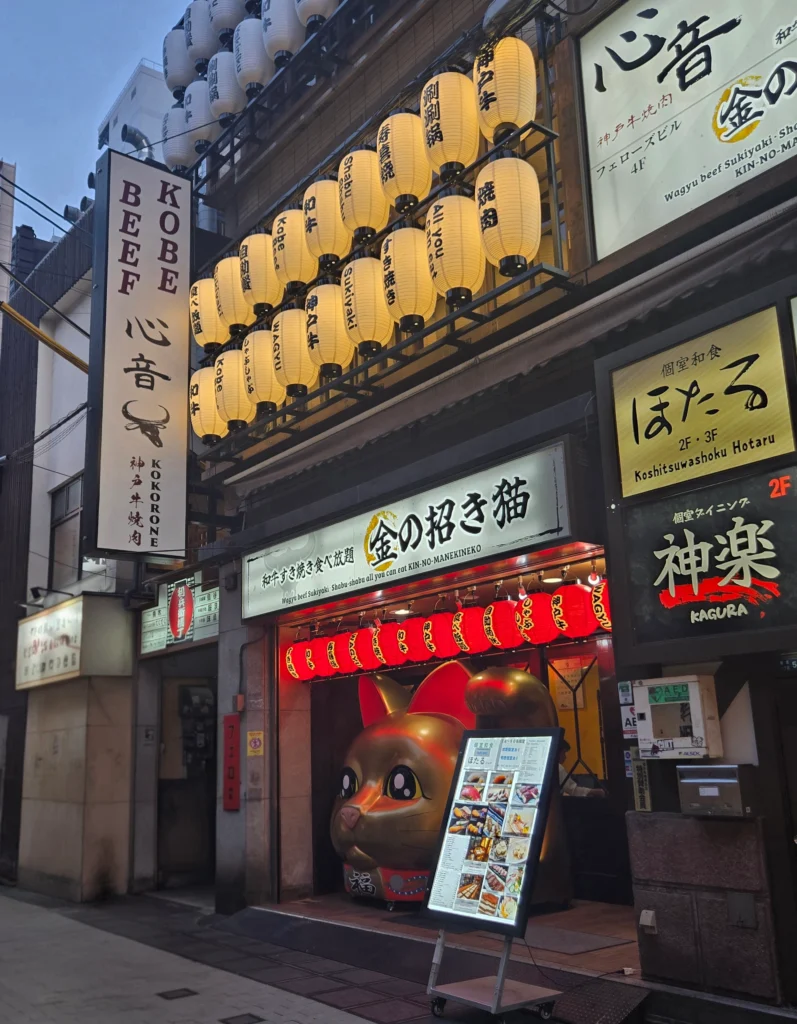
I feel sorry for all the Japanese people who have visited India, or will do so in the future. Japan didn’t just give me a good holiday during a shoulder season. It gave me a mirror. Every day I spent there, I kept comparing Japan vs India infrastructure, almost involuntarily. And by the end of the trip, I wasn’t just impressed by Japan anymore. I was quietly grieving for India.
Here’s everything that trip taught me, section by section, comparison by comparison.
Toilets and Cleanliness
Let’s start with something as basic as it gets: toilets.
Their toilets, even the free ones at train stations, are futuristic and impeccably clean. The seats are warm. The bidet sprays warm water. You don’t need to touch a single tap or flush button; sensors do the work, and all it takes is a hand gesture to get things going. There are separate switches to clean your rear or front, and in some places, there’s even a dryer button so you don’t walk out feeling wet down there.
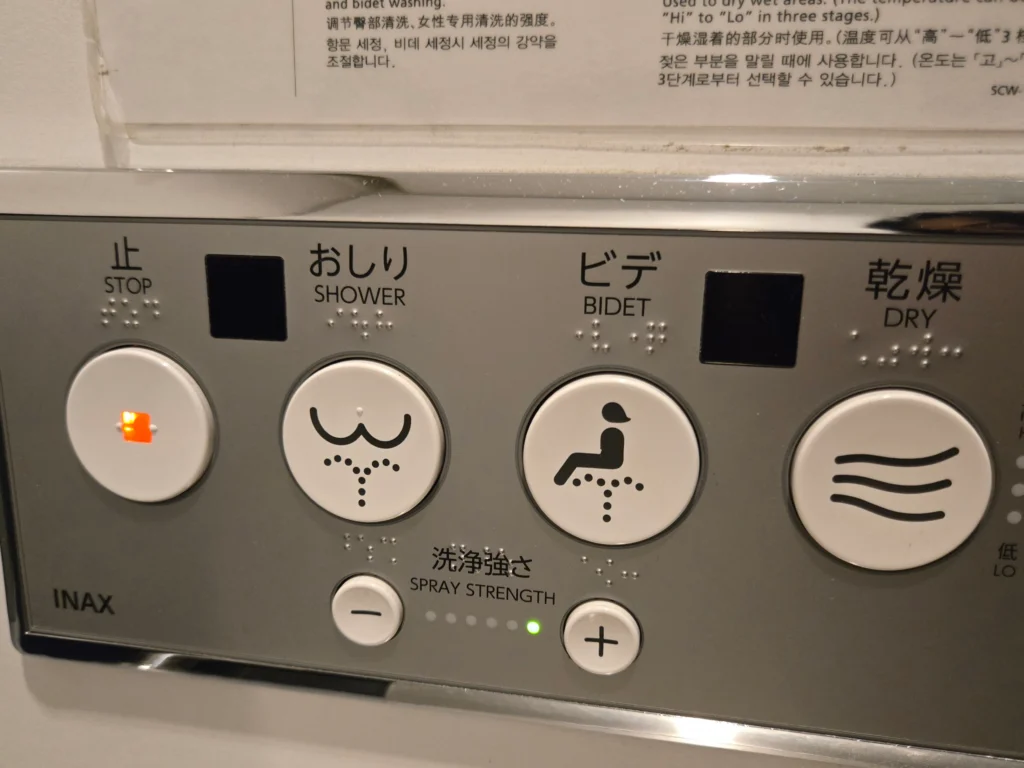
I stood in one of those stalls thinking: this is a public, free toilet. Not a five-star hotel bathroom. Not a mall. A train station toilet, the kind we’d avoid at all costs back home. In India, sensor taps are a luxury reserved for malls, and honestly, not even all malls have them. I can’t even begin to talk about our public restrooms. The ones that charge ₹5-10 for a single use are still dirty and almost always unbearably smelly. I genuinely don’t know who to blame here: the people who don’t maintain them, or the government that doesn’t invest in them. Maybe both.
Public Transport
Then comes public transport, and this is where the gap felt even wider.
After visiting Japan, I finally understood what well-connected public transport actually looks like, and it’s where the Japan vs India infrastructure gap felt widest. Want to reach the airport, the next city, or just a major attraction? Just follow the public transport route Google Maps suggests, and you won’t regret it. The good part is you don’t need separate cards for any of it. Almost everything can be accessed with a single IC card. And the best part? Almost all of the vehicles are air-conditioned. So no heat, no separate cards, no separate queues, no confusion. That same card even works at convenience stores and vending machines.
Throughout our stay, we relied only on public transport, and it was seamless. Not once did we feel stranded or unsure of how to get somewhere. Now imagine a Japanese citizen trying to navigate our public transport system. Would they find it seamless? Would they even find it usable? I don’t think so, and that’s a hard thing to admit about your own country.
How Japan and India Compare on Tourist Etiquette
That covers infrastructure. But when it comes to how they treat tourists, the Japanese are no less impressive.
They go above and beyond to make you feel welcome, and they’re usually the first to offer their seat if you need one. They form orderly queues for even the simplest things, like taking a photo at a shrine or a popular spot, and you will never see them shouting or shoving to cut a line. If someone genuinely needs to cut in, they ask for permission first, and others understand and allow it without a fuss.
Even something as small as standing on an escalator says a lot about a culture. At subway stations, people have long known to stand on one side, leaving the other half clear for anyone in a rush; no one has to ask, everyone just knows. Interestingly, Japan itself is now trying to phase this habit out. Safety campaigns across the country are asking people to stop walking on escalators altogether and just stand still on both sides. But even that shift says something: it’s a top-down safety push, not chaos or indifference, and people are actually listening. Compare that to how hard it is to get any collective behavior to change back home.
The Bigger Question
We Indians pay some of the steepest indirect taxes in the world; our GST top slab of 28% was flagged by the World Bank as the second-highest among 115 countries with a similar tax system, and it comes with far more slabs and complexity than most. So why aren’t we able to fix even the basics?
Now, you might argue that Japan has these amenities because it’s a tourist-heavy country. But I’d push back on that: Japan didn’t build clean toilets and seamless transit for tourists; it built them for its own people, long before tourism boomed. The tourists came after, because the country was already this well-run. Because if it’s the latter, and I believe it is, then when it comes to Japan vs India infrastructure, we’ve been getting the order backwards this entire time.
Do we not want to visit and stay in places that are clean and well-maintained? Don’t you think India’s reputation as one of the dirtiest countries keeps tourists away, on top of the endless tourist traps we’re already known for? Here’s the part that really gets me: most Japanese people can’t speak even basic English, and yet that has never stopped people from visiting their country. Meanwhile, most Indians can speak English fluently, and we’re still so far behind when it comes to tourist footfall. Language was never the barrier. Infrastructure and experience were.
We love to say “Atithi Devo Bhava,” guest is god. But if we’re being honest, it’s the Japanese who actually live it, every single day, without ever needing to say it out loud.
Some Widely Asked FAQs
No, most buses also accept cash (coins and sometimes small notes), so you don’t need an IC card to ride.
Yes. Most washlets use simple pictograms next to each button (spray, dry, flush, etc.), so you can figure it out visually even without reading Japanese or English.
Yes, a little. While IC cards cover most transport, convenience stores, and vending machines, some smaller restaurants, temples, and rural areas are still cash-only, so it’s worth carrying some yen as backup.
It’s the same system. Japan doesn’t run a separate tourist transit network. You’ll use the same trains, buses, and IC cards as everyone else, which is part of why it feels so seamless.
Not widely, but signage in major cities and train stations is usually bilingual (Japanese and English), and translation apps fill most other gaps.