Most of us didn’t grow up learning how to build balanced meals.
We grew up learning which foods were good and which foods were bad.
Roti and paratha were considered healthy staples. Ghee was something to avoid because it had “too much fat.” Refined oils somehow felt like the healthier choice. And when weight loss came up, the solution often sounded simple: just eat less.
At one point in my life, I took that advice quite literally. As a kid who desperately wanted to lose weight, I would sometimes eat only salad, believing that the lighter the meal, the healthier it had to be. Looking back now, I realise something important: most of us weren’t lacking discipline.
We were lacking food education.
What I Later Learned About Balanced Meals
Over time, especially as I began paying more attention to nutrition and observing food habits in different places, I realised that a balanced meal isn’t about eating less or eliminating certain foods entirely.
It’s about balance.
Many meals we grow up with tend to lean heavily in one direction, often toward carbohydrates. Rice, roti, paratha, bread. These foods provide energy, but when they dominate the plate without much protein or fiber, they don’t always keep us satisfied for long.
On the other hand, surviving on salads alone isn’t the answer either. I learned that the hard way.
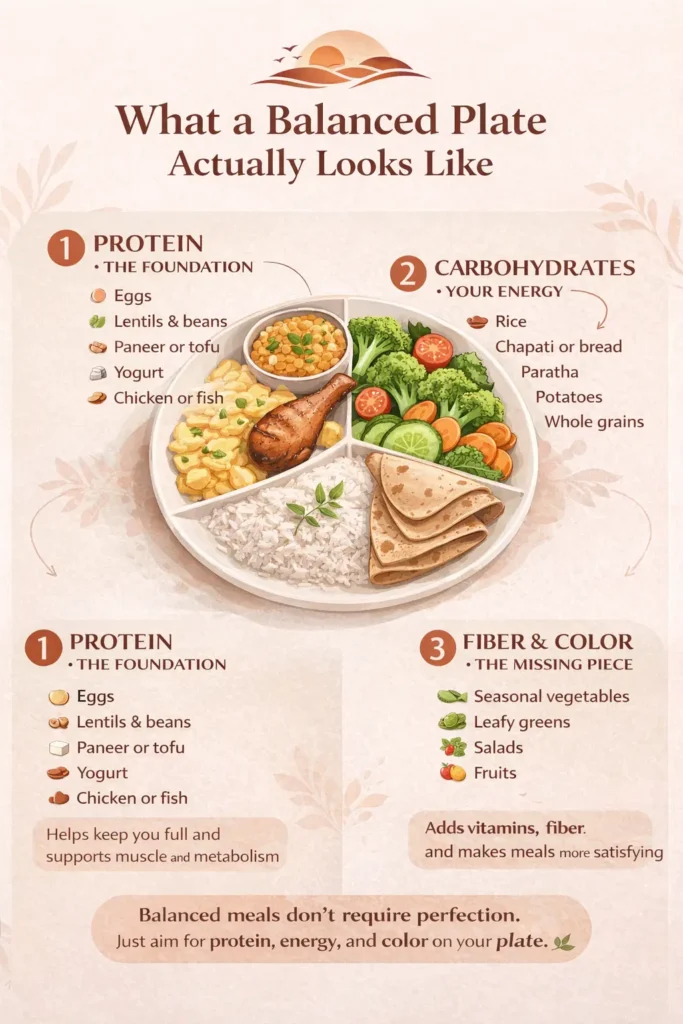
A truly balanced meal simply combines a few key elements.
A Simple Way to Think About Your Plate
Instead of worrying about complicated nutrition rules, it helps to think of meals in three basic parts.
Protein
Protein helps you stay full longer and supports your body in ways that carbohydrates alone cannot.
Some common sources include:
- Eggs
- Lentils and beans
- Paneer or tofu
- Yogurt
- Chicken or fish
- Nuts and seeds
Even a small serving of dal or a bowl of yogurt can make a meal far more balanced.
Carbohydrates
Carbohydrates often get blamed for weight gain, but they are simply a source of energy.
Roti, rice, paratha, bread, and grains all fall into this category. Instead of avoiding them completely, it’s usually more helpful to pair them with other nutrients.
Fiber and Color
Vegetables and fruits bring fiber, vitamins, and variety to a meal.
They also help slow digestion and make meals more satisfying.
Adding a sabzi, a salad, or seasonal vegetables can quietly transform a plate.
What a Balanced Meal Might Actually Look Like
Balanced meals don’t have to look perfect or complicated.
They can be simple combinations like:
- Rice, dal, and a vegetable sabzi
- Chapati with paneer or egg curry and salad
- Eggs with toast and sautéed vegetables
- Grilled fish with rice and greens
Meals like these have probably existed in our homes all along. The difference is simply being a little more mindful about what else goes on the plate.
The Lesson I Took From All This
If there’s one thing I’ve learned about healthy eating, it’s that most of us have spent years trying to follow rules that weren’t always clear or complete.
At different points in my life, I believed that eating only salads would help me lose weight, that ghee was something to avoid, and that certain foods were healthy simply because everyone said they were.
But the truth is much simpler.
Eating well doesn’t require strict diets or constant calculation. It just requires paying a little more attention to balance.
A plate that has some protein, some carbohydrates, and some vegetables already goes a long way.
And sometimes, the most helpful thing we can do is stop overthinking food and start understanding it a little better.