
Where It Started for Me
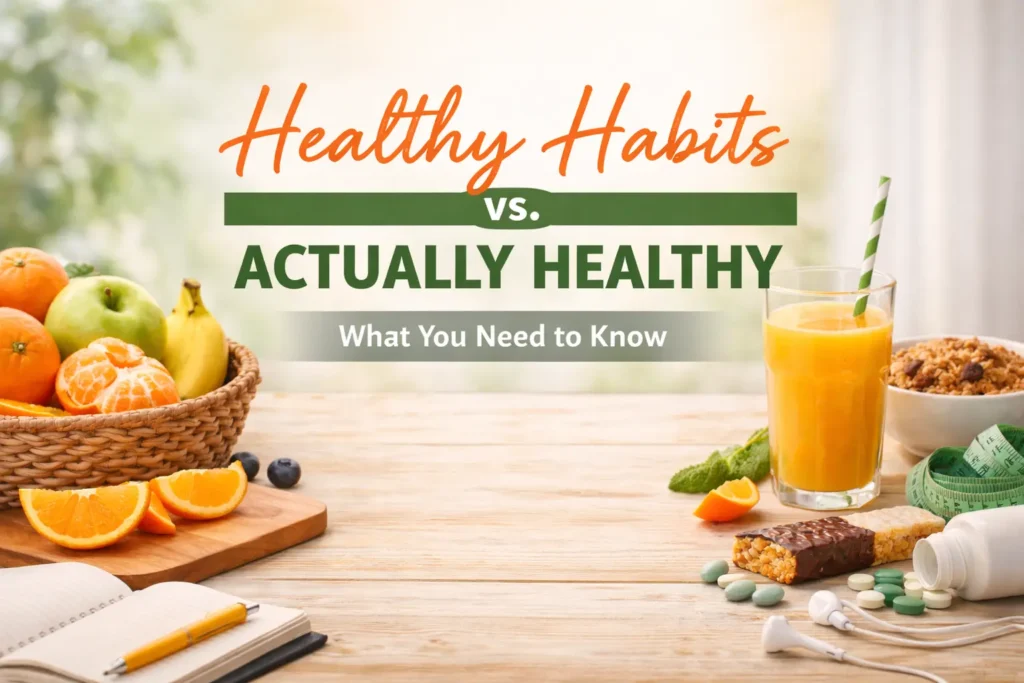
I had a small ritual on my way to the office. Every morning, I would stop by a juice stall and order a glass of freshly squeezed orange juice. It felt like I was doing something good for myself. Something healthy. Something that would, over time, show up on my skin as that elusive “natural glow.”
It made sense in my head—fresh fruit, no preservatives, no packaged nonsense. Just pure juice. At least, that’s what I believed.
But somewhere along the way, I started noticing something that didn’t quite add up. Despite this daily “healthy” habit, nothing really changed. No visible glow. No real difference in how I felt. That’s when I began to look a little closer into simple healthy habits that actually work.
The Truth About That “Healthy” Glass of Juice
What I realized was surprisingly simple: I wasn’t really drinking fruit in the way I thought I was. I was mostly drinking sugar.
When you squeeze multiple oranges into a single glass, you remove the fiber that would normally slow down sugar absorption. What you’re left with is a concentrated dose of natural sugars that hit your system quickly—almost like a soft drink, just without the label.
It wasn’t that orange juice was “bad.” It was just not what I had built it up to be. And that realization opened a much bigger door.
Healthy Habits That Aren’t Actually Healthy
Once I started questioning one habit, I began noticing a pattern. There were quite a few things I had accepted as “healthy” without really understanding them.
Here are a few that stood out:
1. Fruit Juices Over Whole Fruits
Juices feel clean and refreshing, but they strip away fiber and concentrate sugar. Eating the whole fruit keeps you fuller and gives your body time to process the sugars better.
2. “Low-Fat” Packaged Foods
Many low-fat products compensate for taste by adding sugar, salt, or artificial ingredients. You end up trading one problem for another.
3. Skipping Meals to “Eat Less.”
It sounds logical, but skipping meals often leads to overeating later, unstable energy levels, and poor food choices. You can learn more about why eating less doesn’t always lead to weight loss here.
4. Overdoing “Healthy” Smoothies
Smoothies can quietly turn into calorie bombs—multiple fruits, nut butters, sweeteners—all blended into something you consume in minutes.
5. Following Trends Without Context
From detox drinks to extreme diets, many trends promise quick results but ignore long-term sustainability and individual needs.
Why We Fall for These Habits
Most of these habits aren’t random. They’re marketed well. They sound right. And they fit neatly into our busy lives.
“Fresh,” “natural,” “low-fat,” “detox”—these words create a sense of control. They make us feel like we’re doing the right thing, even when we haven’t fully questioned them. And honestly, I wasn’t trying to be misinformed. I was just trying to do better with the information I had.
What I Do Differently Now
I didn’t stop trying to be healthy. I just changed how I define it.
- I eat whole fruits more often than I drink them
For example, instead of picking up a glass of orange juice on the go, I’ll carry an actual orange or a banana with me. It takes a little more effort—peeling it, slowing down enough to eat it—but I’ve noticed I stay full longer and don’t get that sudden dip in energy mid-morning. Even at home, when I feel like having something “fresh,” I’ll cut up fruit instead of turning it into juice. It feels less convenient, but more complete. - I pay attention to how food makes me feel, not just how it sounds
Earlier, if something was labeled “healthy”—granola, smoothies, brown bread—I would just trust it. Now I notice what happens after. Do I feel satisfied, or am I reaching for something else in an hour? I remember switching to certain “healthy” snack bars, thinking they were a better choice, only to realize they left me hungrier. On the other hand, something as simple as dal, rice, and sabzi keeps me steady for hours. That feedback matters more than the label now. - I try to keep things simple instead of chasing trends
I’ve stopped jumping onto every new thing that shows up online—detox drinks, chia seed everything, complicated diet plans that require a shopping list longer than my week’s patience. I’ve gone back to meals I understand and grew up eating—dal, roti, vegetables, eggs—just paying a little more attention to balance. It’s not as exciting as trying something new every week, but it’s a lot less overwhelming, and I don’t have to constantly “restart.” - I focus on consistency over “perfect” habits
I don’t try to get it right all the time anymore. Some days I eat better than others, and I’ve stopped seeing that as failure. What matters is what my overall week looks like, not one meal or one day. If I eat out or have something indulgent, I don’t try to “fix” it by skipping meals or overcompensating. I just go back to my usual routine in the next meal. That shift alone has made everything feel more sustainable.
A Small Shift That Changed Everything
None of these changes felt dramatic in the moment. There was no “day one” or big reset. Just small adjustments, repeated often enough to become normal. And it all started with something as simple as questioning a daily glass of orange juice.
Final Thought
Before you adopt any new habit, ask yourself: Is this actually nourishing me, or just making me feel like I’m making the right choice? That one question can save you a lot of confusion.