
Why Do Indian Parents Hate Protein Supplements?
Is it just me, or do all parents hate protein supplements? I’ve tried asking mine to add more protein to their diet — at least equal to their body weight in grams. But all I get to hear is, “We already have dal, milk, and curd.” How do I explain that each meal should consist of at least 25-30g of protein, and these staples alone just don’t suffice?
While my dad eats non-vegetarian food, it’s only occasional — often not more than two or three times a week. That means three meat meals are somehow expected to cover an entire week’s worth of protein.
My mom, being vegetarian, relies on paneer, milk, curd, and lentils for her protein requirement. It’s a decent effort, but it still isn’t enough to fulfill her actual needs.
If your parents are like this too, maybe this can help you curate their meals a little better. Lemme list out the options you can add to each of their meals, so they’re actually able to fulfill their nutritional protein requirements.
1. Swap Up Their Rotis
Since some parents just can’t get over their rotis aka chapattis, why not replace them with a high-protein option instead? Simply switch to a high-protein atta blend — there are several good ones available now. You can also make your own at home by mixing peanut powder, soy chunks powder, besan, and similar ingredients into regular flour.
It’s an easy switch because it doesn’t ask them to change what they’re eating, just what it’s made of. And since roti is on the table at nearly every meal, it ends up doing a lot of quiet, consistent work.
2. Protein Should Dominate the Meal
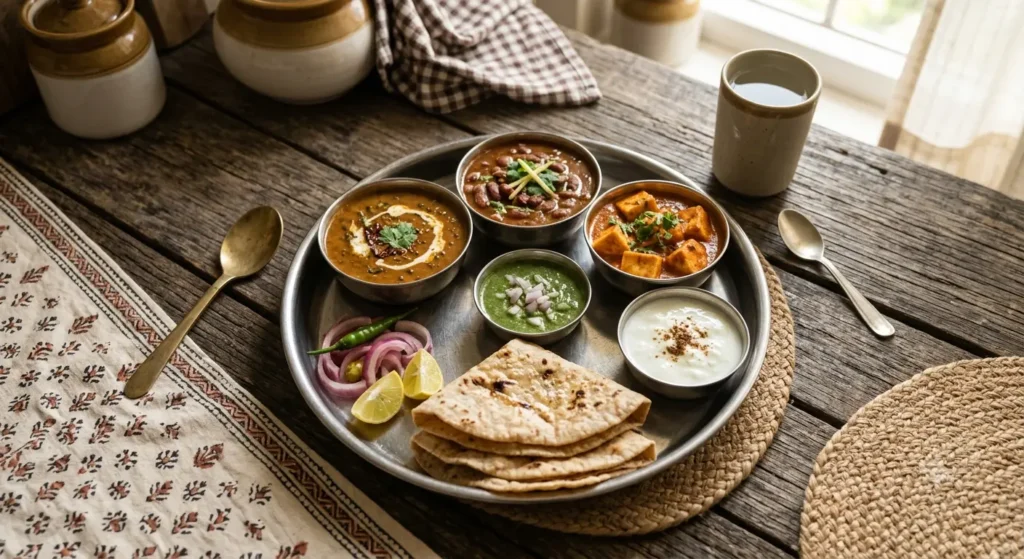
At the very least, a bowl of curd and a bowl of rajma aka kidney beans (alternating with chickpeas, peas, paneer, and tofu) should accompany their rotis or rice — not sit as an afterthought on the side.
And when it comes to rice, make sure you’re not making it in a pressure cooker, where all the starch stays locked in and just makes it more calorie-dense. Boiling it the traditional way and letting the starch water drain out keeps it lighter, and leaves more room in the meal for the protein sources to actually matter.
3. Salad Before the Meal
This is a small step, but an important one. Eating a bowl of salad before the actual meal means they naturally feel more satiated on a smaller quantity of food overall — which makes room for protein-dense options instead of a second helping of rice or roti.
4. Fruits Between Meals
Make sure they’re not missing out on other essential vitamins by including a variety of fruits through the day. One thing to watch for: not all fruits are equal here. Bananas and grapes run higher in sugar, so they’re fine occasionally but shouldn’t be the everyday default. For regular consumption, lean toward apples, guavas, papayas, and oranges instead.
If they’re diabetic, one rule matters more than the rest — no fruit on an empty stomach.
5. Add, Don’t Force
If they’re used to a high-carb breakfast like poha or upma, you don’t need to remove it from their routine altogether — that kind of change rarely sticks anyway. Instead, add a protein source alongside it while slightly reducing the portion of the carb-heavy dish. Think 2-3 boiled eggs, 100g of paneer, or 100g of roasted peanuts, depending on what they actually like.
Where possible, get them to start the meal with the protein first. If they’re already a little full by the time the poha or upma comes around, they naturally won’t overindulge on the carb-heavy part.
Only by striking this kind of balance can they really achieve good health. I understand changing everything at once isn’t realistic — so bring these changes in slowly, one meal at a time. Somewhere along the way, they won’t even realise it’s happened. It’ll just become a habit. A habit for good.