
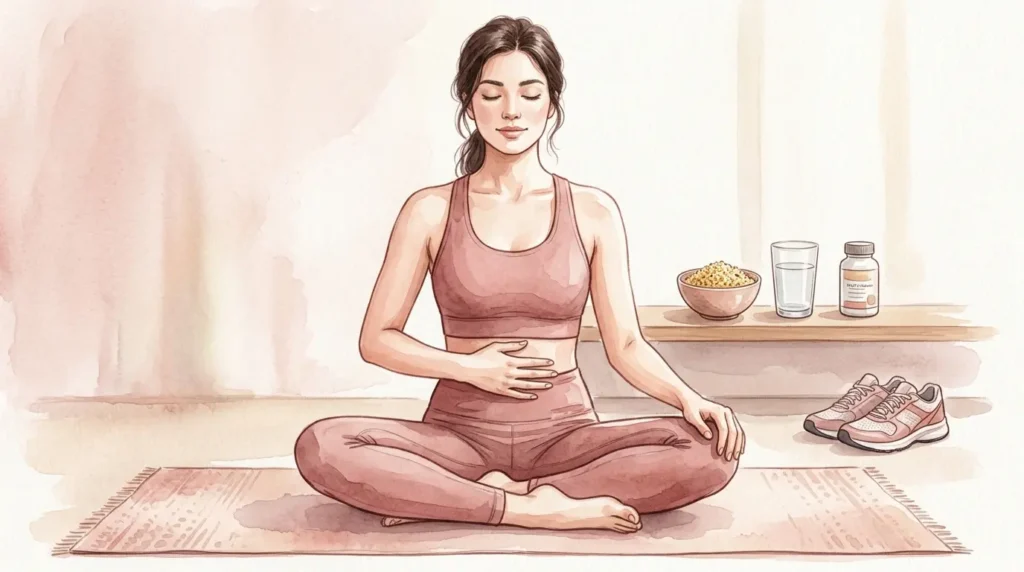
I do get cramps during my periods, but they’re nowhere near as severe as they used to be back in college. And yes, I’ve made some deliberate changes over the years that I believe have contributed to this. These aren’t overnight fixes or dramatic lifestyle overhauls — they’re small, consistent habits that have quietly added up. Let me walk you through them.
1. Moving Your Body
If you want to address any physical discomfort (period cramps included), you have to move your body. I know it sounds counterintuitive when you’re curled up in pain, but regular exercise throughout the month (not just when you’re cramping) genuinely helps. It improves circulation, reduces inflammation, and helps regulate hormones over time.
Stretching, walking, running, swimming, yoga — pick whatever you actually enjoy and will stick to. The best workout is the one you’ll do consistently. Dietary changes alone won’t cut it. Movement is non-negotiable, and it doesn’t have to be intense or time-consuming. Even 30 minutes of walking daily can shift things meaningfully.
2. Routine Blood Tests and Multivitamins
This one is seriously underrated, and I don’t think enough people talk about it. Severe menstrual cramps can actually be triggered or worsened by nutritional deficiencies — particularly low Vitamin D, low magnesium, and low iron levels. Many of us are deficient without even knowing it because the symptoms are subtle until they aren’t.
I now get a full body check-up at least twice a year so I can catch any deficiencies early and address them with the right multivitamins before they snowball into something bigger. It’s a proactive habit rather than a reactive one, and honestly, it’s one of the best things I’ve done for my overall health, not just my periods.
3. Cutting Out Oily Food
During college, fast food was the default because it was the cheapest option — and when you’re surviving on pocket money, budget wins every time. Samosas, gol gappe, aloo tikki, you name it, we ate it on a near-daily basis. Oily and fried foods promote inflammation in the body, and inflammation is very much linked to how intense your cramps feel.
The one saving grace was that I was never drawn to packaged and processed foods — no chips, no instant noodles obsession — and that hasn’t changed. It’s a small win, but I’ll take it. Cleaning up the oily food habit made a noticeable difference, not just for my periods but for my digestion and energy levels overall.
4. Adding Millets to My Diet
You’ve probably seen the buzz around millets over the last couple of years — they’ve had quite a moment. And yes, I bought into it. Millets are rich in magnesium, fibre, and antioxidants, all of which help reduce inflammation and support hormonal balance. For someone prone to cramps, that combination is genuinely useful.
For me, the switch wasn’t particularly difficult because I was never a big fan of wheat rotis to begin with. So replacing them with jowar, bajra, or ragi rotis felt more like an upgrade than a sacrifice. If you do love your wheat rotis, the transition might take some getting used to, but it’s worth experimenting with. Even incorporating millets a few times a week rather than a full switch can make a difference.
5. My Zero Sugar Policy
In college, I had a major sweet tooth. We’re talking chocolate, mithai, cold drinks — if it was sweet, I wanted it. If you know how sugar affects hormones and inflammation in the body, you’ll understand exactly why that was a problem. Sugar spikes insulin levels, which in turn can throw your hormones off balance and worsen period symptoms, including cramps.
When I decided to quit sugar primarily to lose weight, a wonderful side effect followed — significantly milder cramps. It wasn’t something I was expecting, but my body made it very clear that it preferred life without the sugar rollercoaster. I know quitting sugar is easier said than done, so I’ve written a separate blog on how I actually did it. Hopefully, it gives you a practical starting point.
Parting Words
So those are my five inputs on working towards a cramp-free period. It’s not one magic fix — it’s a combination of things that build on each other. Keep moving, get your levels checked, reduce the oily food, try some millets, and tackle the sugar. Your body will thank you, not just during your period but all month long.
See you in the next one!