
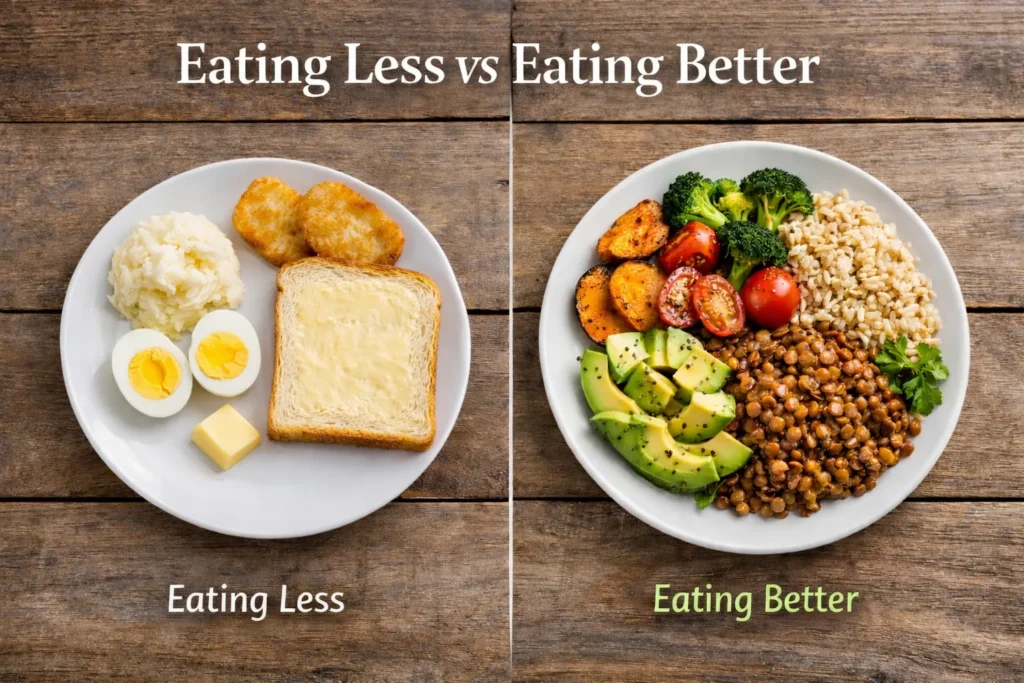
For most of my childhood, the advice around food was surprisingly simple. Eat less.
That was the solution offered for everything — weight gain, low energy, poor health, even body image. If something wasn’t right, the assumption was that the problem was quantity. No one really talked about what we were eating.
And for a long time, I believed that eating less was the same as eating better. Unfortunately, it isn’t.
When “Eating Less” Becomes the Default Advice
When people say to eat less, they usually mean well. It sounds practical and straightforward. But the problem with that advice is that it focuses only on reducing food, not improving it.
So what often happens is something like this:
Someone skips breakfast.
They avoid rice or bread completely.
They cut portions drastically.
Yet the rest of their diet remains exactly the same. The body receives less food, but not necessarily better nutrition. And over time, that can create a strange cycle: low energy, constant hunger, and the feeling that food is something to be controlled rather than understood. Been there, done that!
Eating Better Is About Quality, Not Just Quantity
Eating better doesn’t always mean eating less. Sometimes it simply means changing what fills the plate. A meal with lentils, vegetables, grains, and a source of fat will nourish the body very differently from a plate that is mostly refined carbs or processed food, even if the calories are similar.
The difference shows up slowly:
- energy that lasts longer
- fewer cravings throughout the day
- better digestion
- feeling satisfied after meals
In other words, the body starts responding to nutrients, not just calories.
Why This Difference Matters
When food becomes about restriction, it often turns into a battle of willpower. But when food becomes about nourishment, something shifts. Meals stop feeling like a problem to solve and start becoming something that quietly supports the day: energy to work, to think clearly, to move, and to rest well at night. It’s a small shift in perspective, but a meaningful one.
A Better Question to Ask
Instead of asking:
How can I eat less?
It may be more helpful to ask:
How can I eat better?
That question opens the door to curiosity rather than control. It invites us to look at balance, variety, and how food actually makes us feel.
And often, the surprising discovery is this:
When meals are nourishing enough, the body naturally finds its own balance. No strict rules required.