
“I Hardly Eat Anything, But I’m Still Gaining Weight” — A Common Story
As a child growing up in a small town in India, I kept hearing the same refrain from most women around me: “I hardly eat anything, but I still keep gaining weight.” Their meals were modest, one to two chapatis and a bowl of vegetable curry, and they believed they were doing everything “right.” That puzzled me. How could people eat so little and still struggle with weight? The issue wasn’t how much they ate, but what they ate.
It was only years later that I began to understand why eating less but still gaining weight isn’t as unusual as it seems. Many women I met elsewhere had plates filled dominantly with eggs, fish, or meat, along with a smaller portion of vegetables and grains. Back home, meals were overwhelmingly centered on carbohydrates, with rice, chapati, or bread. The problem, I realized, wasn’t always quantity. It was a lack of food education and an incomplete view of what “eating well” actually means.
Why Eating Less but Gaining Weight Isn’t as Uncommon as You Think
The idea that weight and health are solved simply by “eating less” is surprisingly persistent because it’s easy to understand. But human bodies are not calculators where fewer calories automatically translate to better health. Several interconnected factors shape how we look and feel.
The Missing Piece: Protein and Satiety
Diets rich in refined carbohydrates often leave people feeling hungry sooner, encouraging snacking and blood sugar swings. Protein—found in eggs, fish, meat, legumes, and dairy—builds and repairs tissue, supports muscle mass, and keeps us fuller for longer. Without adequate protein, people can unintentionally underfeed their muscles while still consuming enough energy to store fat.
Carb-Heavy Meals and Hidden Hunger
In many communities, traditional meals and social norms shape what we view as “correct” eating. Where nutrition education is limited, people often equate small portions of carbohydrate-heavy meals with health, missing the importance of protein, micronutrients, and balanced meals.
What a Balanced Plate Actually Looks Like
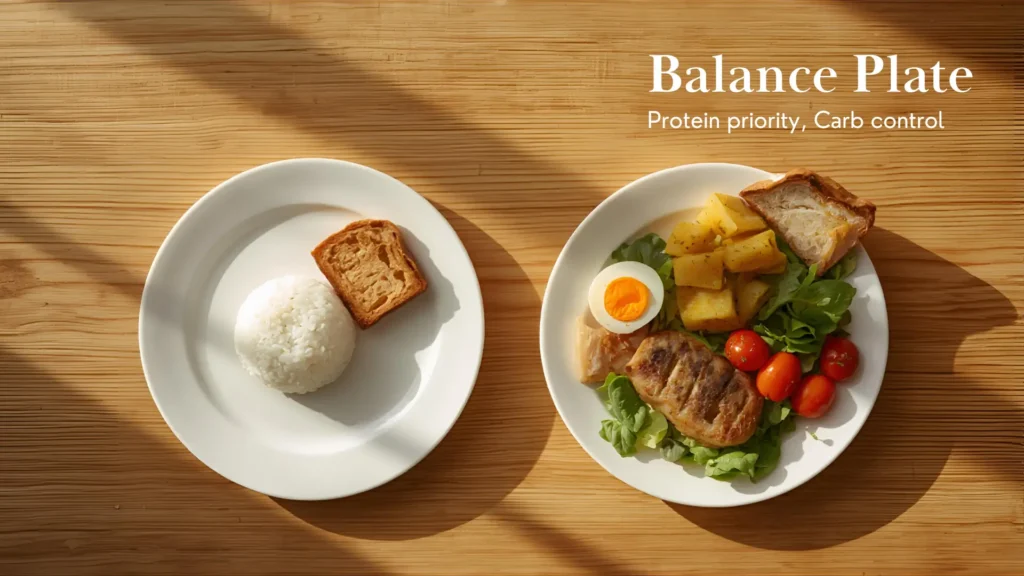
Two plates can look the same size but have very different effects on metabolism. A plate of rice with potato curry will certainly be processed differently than a plate of egg curry, salad, and multigrain bread, which is richer in protein. Oils, ghee, sugary beverages, and fried snacks add significant calories without increasing satiety. Small habitual choices like tea with sugar, frequent fried snacks, or large portions of rice, accumulate over time. While arranging our plates, we should remember that quality matters as much as quantity. Building simple healthy eating habits can make this shift easier over time.
Not Just Food: How Sleep, Stress, and Lifestyle Affect Weight Gain
Sedentary Work and Slower Metabolism
Our 9-to-5 desk jobs have made our lives sedentary; this means whatever we eat gets stored mostly as fat. On top of that, if our diet is low in protein, we may lose lean mass, end up slowing down our metabolism, and find it easier to gain weight.
The Role of Sleep and Hormones
Additionally, chronic stress and poor sleep change hormone balance. They often play with cortisol and insulin levels, which influence appetite, fat storage, and energy levels. If you “eat little” but sleep poorly (less than 6-8 hours) and are highly stressed (work does that to us), you are prone to gaining weight or have a difficult time losing it.
How to Stop Gaining Weight Even If You’re Eating Less
Understanding these complexities doesn’t mean we must complicate our lives. Small, informed changes can be powerful: aim to include a protein source at each meal. For example, if you weigh around 60 kg, you may need around 55–60g of protein daily, much more than what a typical carb-heavy plate provides.
Just double the quantity if you lift weights or lead a very active lifestyle. Also, add a vegetable or salad to increase fiber and micronutrients, such as cucumber, carrot, broccoli, or anything you like. To supplement these efforts, make sure to reduce your sugar intake (if doable, cut it out completely). Understanding how sugar affects your body can make this change more intentional. And most importantly, prioritize sleep and movement.
Small, Practical Changes That Actually Work
While incorporating these changes, just remember that living well is not about punishment through restriction, but about learning how food, movement, rest, and stress interact in real life. Try to focus on practical guidance that honors tradition while adding evidence-based choices; recipes that boost protein without losing flavor, small habit shifts that increase daily activity, and clear explanations of how hormones and sleep affect weight.
Eating Less Isn’t the Answer—Understanding Your Body Is
If you, or someone you love, has been told to “just eat less,” remember: that advice can be incomplete at best and harmful at worst. Living well is nuanced, and the more we understand the “why” behind our bodies, the better choices we can make.