
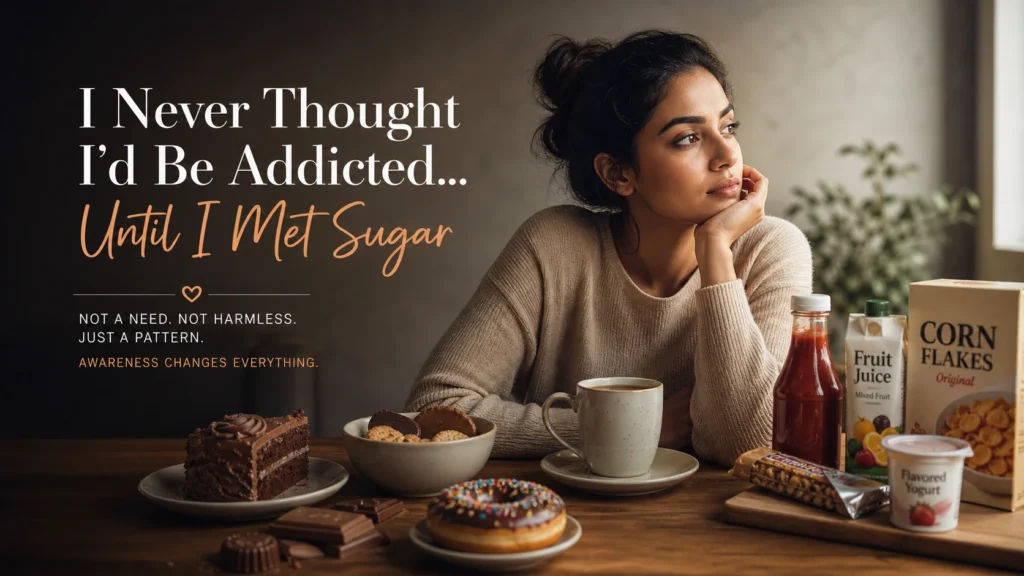
As a kid, I was convinced of one thing that I would never get addicted to anything. To me, addiction meant alcohol, cigarettes, gambling, or drugs. I had seen families around me fall apart because of alcohol, and honestly, I never understood the appeal. It just didn’t make sense.
But life has a way of humbling your assumptions. Because what I loved unconditionally was sugar. Sweets, chocolates, desserts… anything sweet brought instant joy. It was comfort, celebration, reward, and sometimes, even stress relief. And for the longest time, I never questioned it.
After all, it’s just food… right? To even relate sugar with addiction would be so uncool, wouldn’t it?
The Realization That Hit Late
It wasn’t until my late 20s that something shifted. A colleague casually mentioned that our bodies don’t actually need table sugar, and that he avoids it entirely. That’s one of those truths nobody wants to hear. And I didn’t either. My immediate reaction was denial. Is that even possible?
Because if we don’t need sugar:
- Why is it everywhere?
- Why are entire industries built around it?
- Why do people feel weak when their sugar drops?
None of it added up. The math simply wasn’t mathing. But curiosity had been planted.
The Hidden Sugar Problem
Things started to make sense when I came across foodPharmer on Instagram. His content focuses on exposing how much hidden sugar we consume daily, and that was genuinely eye-opening.
Because sugar isn’t just in obvious places like desserts. It quietly shows up in everyday “normal” foods:
- Bread
- Ketchup
- Packaged juices
- “Health” drinks
- Breakfast cereals
- Flavored yogurt
- Protein bars
And here’s the catch: you don’t taste most of this sugar. So while you think you’re eating “balanced,” your body is already overloaded. Which makes that extra spoon of sugar in your tea or coffee… not a need, but an unconscious addition.
Do We Really Need Sugar?
Here’s the uncomfortable but important distinction: Your body needs glucose. It does not need added sugar.
Glucose is something your body can naturally produce from:
- Fruits
- Vegetables
- Whole grains
- Dairy
Through a normal metabolic process, your body breaks these foods down into glucose: steady, usable energy. But added sugar? That’s quick, sharp, and addictive. It spikes your energy… and then crashes it just as fast. And that crash? That’s what makes you reach for the next sweet fix.
Why Sugar Feels Addictive (Even If We Don’t Call It That)
This is the part most people don’t talk about. Sugar taps into your brain’s reward system. Every time you eat something sweet, your brain releases dopamine—the same “feel-good” chemical associated with pleasure and reward.
Over time, your brain starts remembering:
“Sweet = feel better”
So the next time you’re stressed, tired, bored, or even slightly low, you don’t decide to eat sugar. You crave it. And that’s where the line between liking and depending starts to blur.
Addiction Doesn’t Always Look Dangerous
What makes sugar tricky is how invisible it is as an addiction.
There are:
- No warning labels
- No social stigma
- No one is telling you to “cut down” at family gatherings
In fact, it’s the opposite. We celebrate with it (think birthday cakes), we reward with it (think candies and sweets), and we comfort ourselves with it (that chocolate bar you couldn’t resist after a long day at work).
But slowly, patterns start forming:
- You crave something sweet after every meal
- Your mood dips when you don’t have it
- “Just one bite” turns into more
- You feel incomplete without it
And one day, you realize: This isn’t just enjoyment anymore. It’s dependence.
Where I Stand Now
I didn’t quit sugar overnight. And honestly, I don’t think that’s realistic—or even necessary—for most people. What changed for me was awareness.
I started:
- Reading labels
- Questioning “healthy” packaging
- Noticing how often I reached for sugar without thinking
And that alone made a difference. Today, I still have sugar, but consciously. Because if you’re eating clean throughout the day, that one teaspoon in your chai or coffee isn’t the problem. The problem is unconscious consumption.
What Actually Helped Me (Practical Takeaways)
Without making drastic changes, a few small shifts helped:
- Reducing hidden sugar first (packaged foods), like white bread or instant soup mix
- No sugary treat after every meal, replaced it with dates or fruits
- Letting my taste buds adjust gradually, moderation matters
- Not labeling foods as “good” or “bad,” just being aware of what’s necessary and what’s not
Because extreme restriction often backfires, and withdrawal starts to show up. Awareness doesn’t.
Final Thought
The biggest surprise of my life wasn’t discovering sugar was unhealthy. It was realizing that something so normal, so harmless-looking… could quietly take control without you noticing. Not through intensity. But through repetition.
And maybe that’s what makes it the most powerful kind of addiction. Because now I understand: It’s not a need. It’s a pattern. And only once you see the pattern, you can change it.